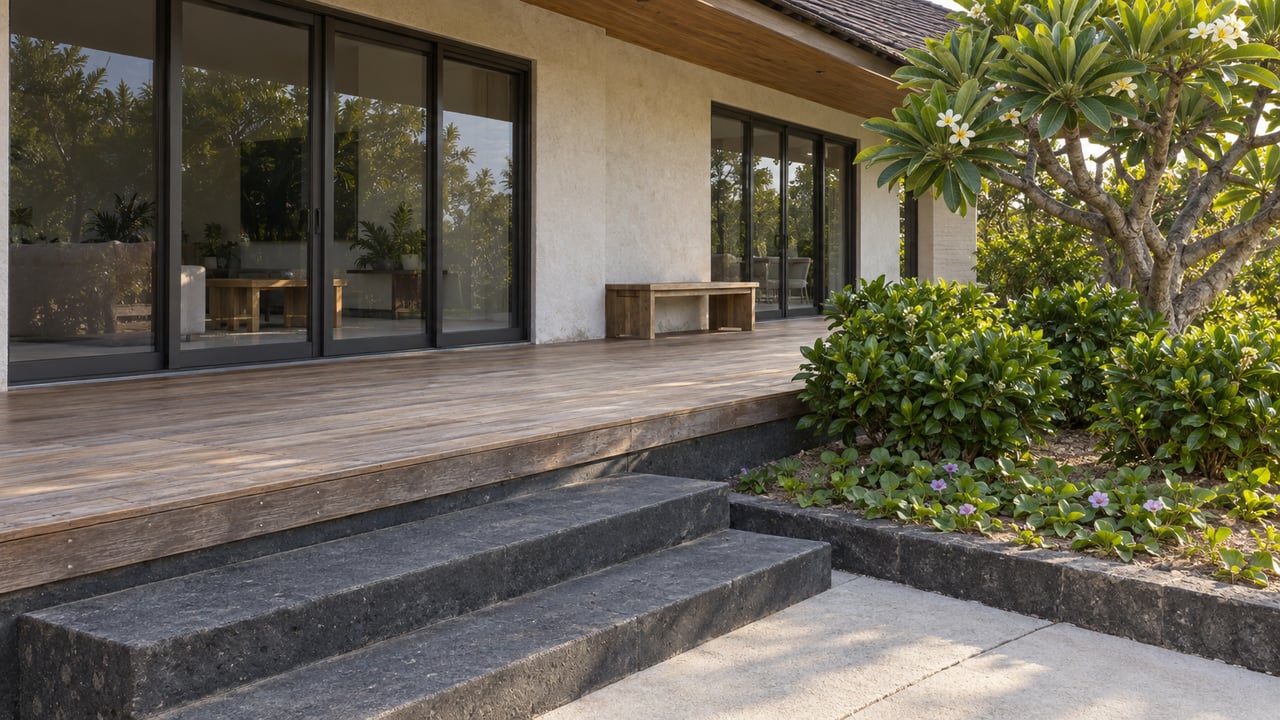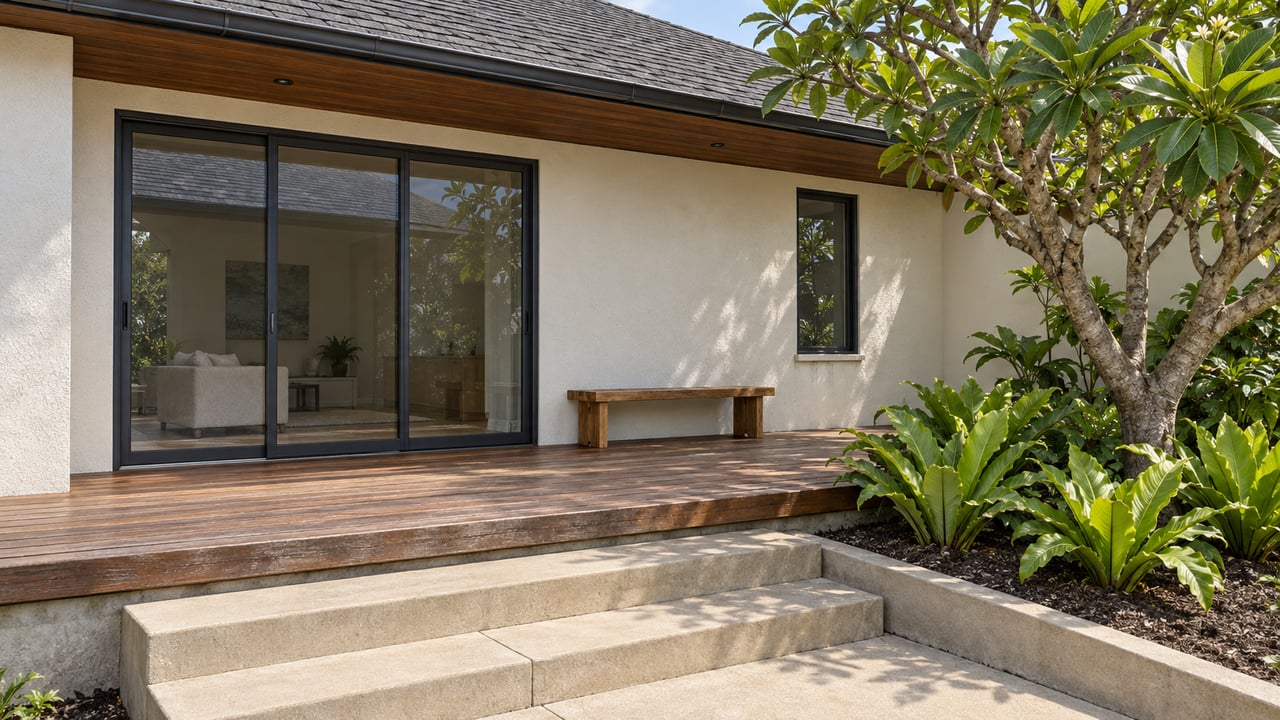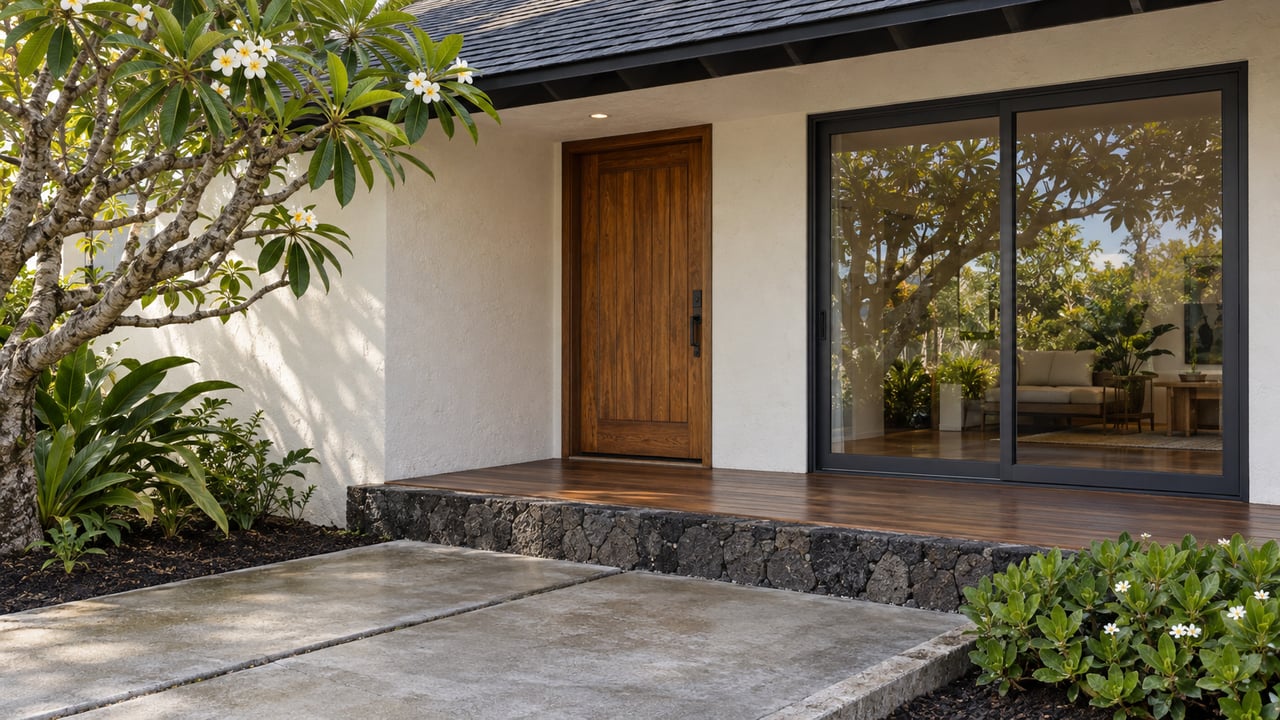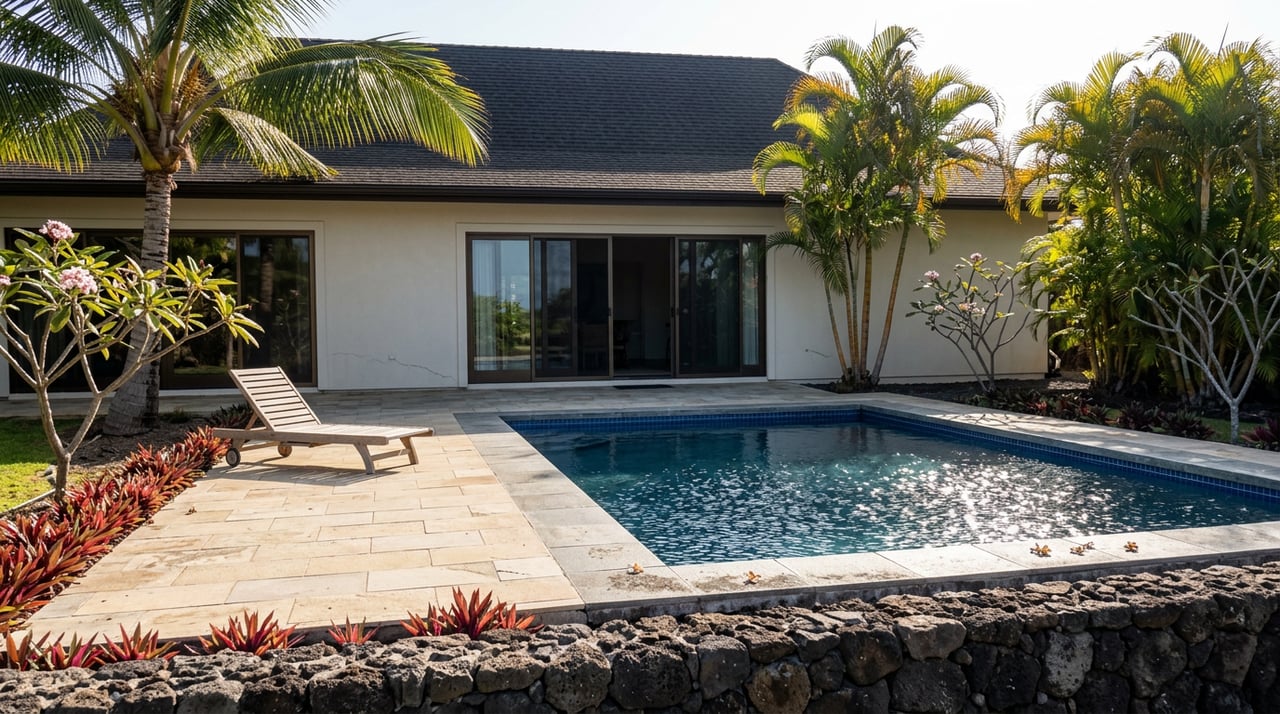
Two buyers close on similar single-story homes the same week. One is in Wailea, one is up the road in Kihei. Both plan the same remodel: repaint, reroof, swap the fence, add a modest lanai extension. Twelve months later the Kihei owner is finishing. The Wailea owner is still in review, has revised the roof spec twice, has been told the fence design needs to be attractive from both sides, and is waiting on a landscape plan resubmittal. The gap is not permitting. The gap is a private review layer that runs on top of Maui County and does not appear on any MLS sheet.
For buyers comparing Wailea to other South Maui options, the median price is the least interesting number in the file. The more useful number is how many exterior decisions on a Wailea lot are already made for you by a document recorded on title.
What "recorded on title" actually means here
Every parcel inside the roughly 1,500-acre Wailea master plan is bound by architectural controls that transfer with the deed. Architectural controls are placed on all properties in Wailea, recorded on title, in order to preserve the aesthetic continuity of new projects and protect existing property values, with the association relying on its Design Committee of professionals. That is not a soft HOA guideline. It is a covenant that runs with the land, and it survives every resale.
The Wailea Community Association is the resort community association for the 1,500-acre master-planned community, and its membership includes owners of individual condominiums, villas, penthouses, hotels, single and multifamily residential homes, and undeveloped lots. Practically, that scope is the point. A buyer purchasing a single-family lot in Wailea Pualani, a villa in Hoolei, or a condominium interest in Wailea Elua or Wailea Ekahi is stepping into the same recorded framework, applied at different scales.
Three reviews, not one
The stack most buyers assume they are entering is one review: the County of Maui. The stack that actually applies to a Wailea exterior change is three, and skipping the top of it is the failure mode.
| Layer | What it controls | Triggered by |
|---|---|---|
| WCA Design Committee | Exterior aesthetics across the full resort: materials, roofs, walls, fences, landscape, signage, mailboxes, satellite equipment, building envelope | Any exterior change or landscape change on any Wailea lot |
| Sub-association (AOAO or HOA) | Complex-level rules for the specific project: Wailea Kai, Wailea Point, Wailea Elua, Wailea Ekahi, Grand Champions, Hoolei, Kai Malu, Wailea Fairway Estates, Wailea Golf Estates, La'i Loa | Membership in the sub-community; some also require design review of interior alterations that touch common elements |
| County of Maui | Building code, zoning, permits | Structural work, plumbing, electrical, new construction, most demolition |
The middle layer is not decorative. Wailea Kai is a member of the master association known as WCA, which has its own governing documents and rules, and these impact owners frequently in the areas of construction, remodeling and landscaping. A Wailea Kai owner is subject to Wailea Kai's rules and to WCA's rules. Both need to sign off before the county drawing set is worth submitting.
The rules that quietly redirect a remodel
The Design Committee rules are specific, and the specificity is where budgets slide. Reading the current guidelines against a typical mainland-buyer renovation wish list, the recurring collisions are:
- Roof materials. Roofs must use wood shingle, wood shake, concrete tile, clay tile, or copper, with other materials of equivalent texture and character subject to Committee approval by sample. Standard architectural asphalt shingle is not on that list.
- Contractor licensing. No work is permitted unless performed by a licensed contractor in the State of Hawaii, and licensed contractors include general contractors, all specialty trades, and landscaping. That reaches the landscape crew, not only the framer.
- Materials quality. Materials used for structures must be new and of a quality consistently associated with superior quality custom-designed homes, with no used materials permitted except where specifically approved in writing. Reclaimed and salvage looks that read well on a mainland design blog need pre-approval or need to be dropped.
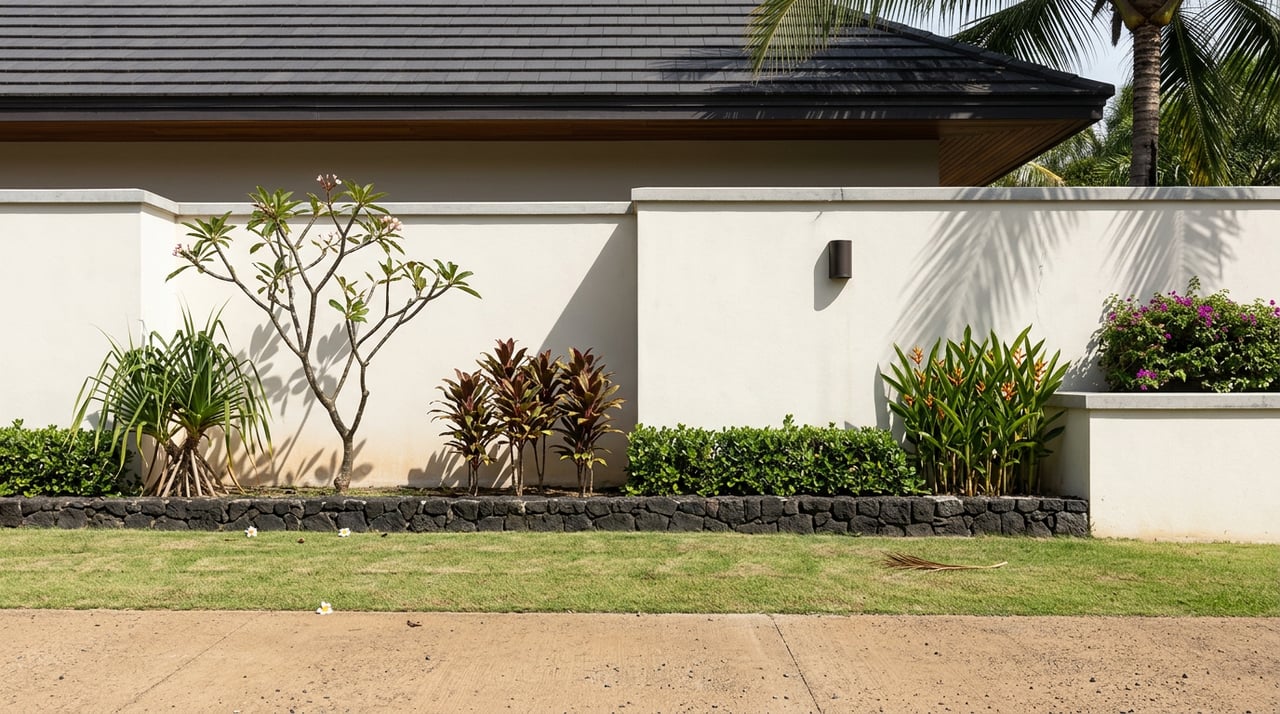
- Fences and walls. Fencing must be designed to be equally attractive from both sides, and plain board fences are not permitted. Walls parallel to a street require modulation of at least eight inches for each ten feet of length.
- Landscape as a submittal. A planting plan with species and size specified and a fully automatic irrigation plan with equipment list are required submittals. Synthetic turf is not permitted in Wailea unless specifically reviewed and approved by the Design Committee.
- Grading. Cuts and fills above committee thresholds require civil-engineer verification submitted with the preliminary design package, which means a Wailea pool relocation on a sloped lot is a different animal than the same job in an unrestricted neighborhood.
- Signage, mailboxes, satellite dishes. Mailboxes must be custom-designed to reflect the style of the residence and cannot be purchased from a retail or wholesale establishment unless approved. Rooftop-peak satellite locations and street-visible dishes are effectively off the table.
- Drone use. Wailea is a drone-free resort. That reshapes how listing photography and construction progress documentation get produced.
WCA considers landscaping a major design element to the Community and to the individual homes within the Community. Landscape design should be an integral part of the total project or home design process, and the planting design should have a significant visual impact at the time of installation.
That sentence is the operative one. In Wailea the landscape is treated as architecture. Buyers who assume they will "figure out the yard later" are the buyers who end up in a second submittal cycle.
The fee, and what it signals
The review layer has a modest financial teeth in ordinary maintenance disputes. A maintenance condition in dispute is subject to review by the Design Committee, which may require the responsible party to pay a review fee of no more than $500 for each review, refunded if the Committee rules in the party's favor. Enforcement escalates through a defined ladder. A first offense draws a verbal request or written notice to change or comply; a second violation of the same offense draws a written notice and warning of fine; a third draws a written notice and fine. The point is not the dollar amount. The point is that this is a standing process with staff, minutes, and forms, not a neighborly conversation.
The WCA's own guidance to new owners is direct: if you plan to make any exterior changes to your home or landscaping, review the Design Guidelines and submit plans for approval, and this helps protect property values and maintain Wailea's signature aesthetic. That instruction shows up on the day the deed records, not before.
What this does to a Wailea listing
For a seller, the design layer is either a marketing asset or a marketing liability, depending on the paperwork. A home whose recent renovation was cleanly approved carries an invisible premium: the buyer can visually confirm the roof profile, the wall modulation, the landscape composition, and know that the next owner's continued work starts from a clean file. A home whose exterior shows unapproved modifications carries the opposite risk. The next buyer's design counsel will find them, and the correction cost lands in the negotiation.
For a buyer, the read is quieter. Photos of a Wailea property that show a plain-board fence, a synthetic-turf putting area, or a non-conforming roof material are not evidence of what the buyer can keep. They are evidence of what may need to be undone. The listing shows a condition. The Design Committee sets the reversion.
The due diligence move most Wailea buyers skip
Before writing an offer on a Wailea single-family home the buyer plans to renovate, three requests do more than a general home inspection can:
- Ask the seller for the property's WCA Design Committee history: prior submittals, approvals, and any open compliance items. This is available to owners through the WCA Member Portal, which is the correct system of record.
- Confirm the sub-association's approval scope in writing. A Wailea Kai file and a Hoolei file read differently, and both matter.
- Match the desired scope of work against the current Design Committee Rules before the inspection period closes, not after. Roof, fence, and landscape are the recurring cost swings.
The reason to sequence it that way is simple. A Wailea offer written without this check is priced against a house. A Wailea offer written with this check is priced against a house plus a known review path.
Two questions this raises
Does the design review apply to interior work? Not on its face. The recorded controls target exterior aesthetics and landscape. A sub-association may have separate rules where interior work touches common elements such as party walls, plumbing stacks, or lanai enclosures, which is why the sub-HOA file matters alongside the WCA file.
Does an "already approved" plan transfer to the next owner? Approvals are project-specific and time-bound, and a lapsed approval is not a shield. A buyer who intends to build the seller's approved but unbuilt design should confirm current status directly with the Design Committee before treating that approval as an asset in the offer.
Wailea's aesthetic continuity is not accidental, and it is not free. Buyers who price that continuity into the offer are buyers who close well. Buyers who discover it during the first submittal cycle are the ones who pay for the lesson twice. If you are weighing a Wailea single-family or condominium purchase and want a read on the design review file before you write, Kate and Wendy Peterson work these submissions with clients across Wailea and Makena and can walk the specifics of your target property before the inspection period closes. Schedule a Showing.