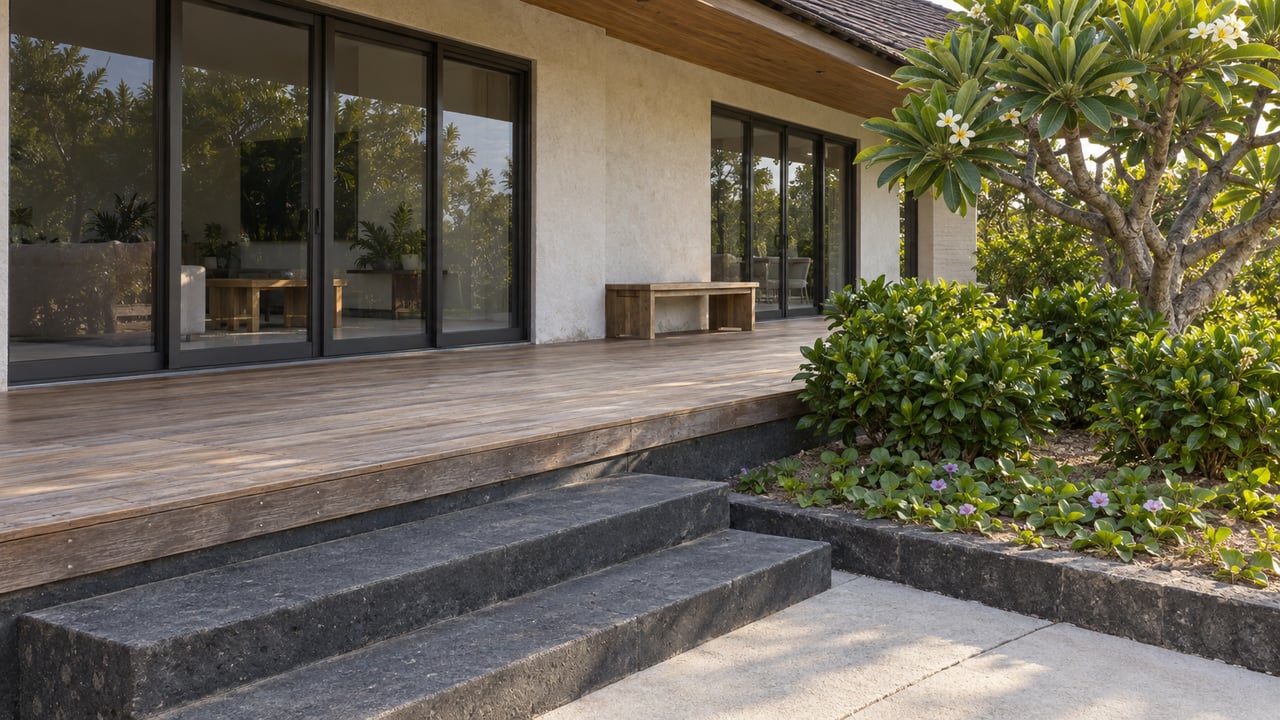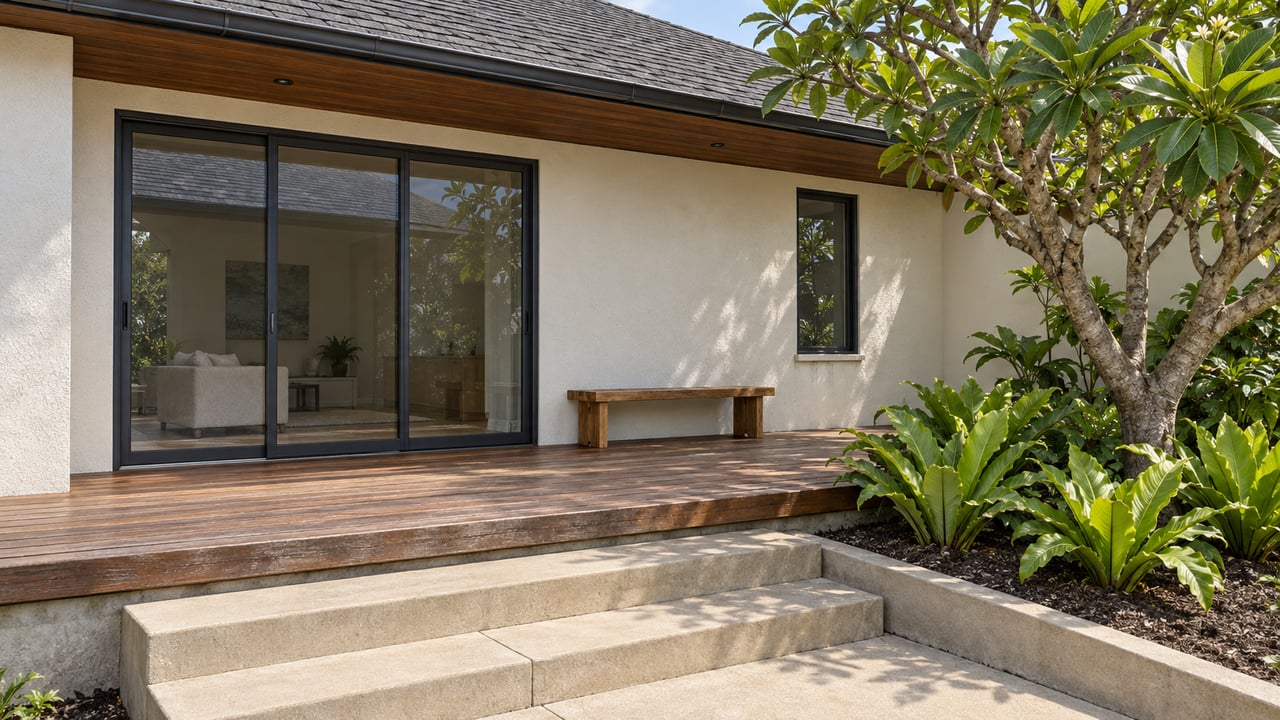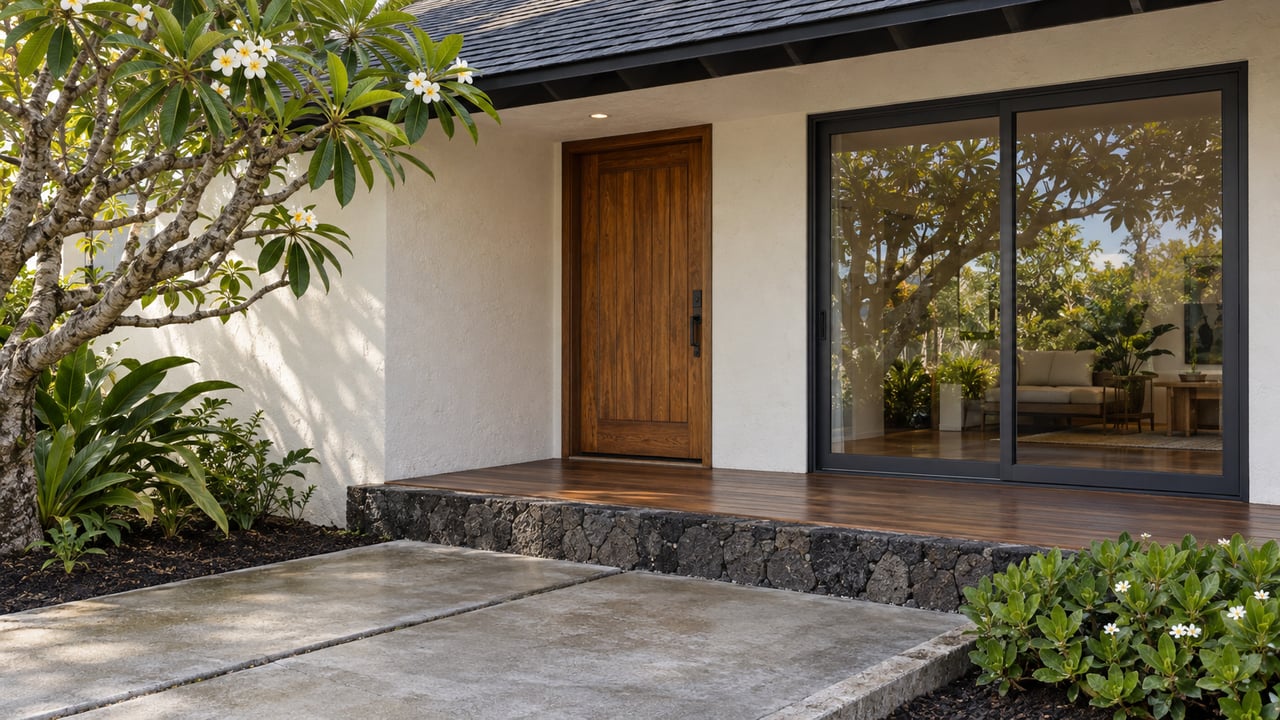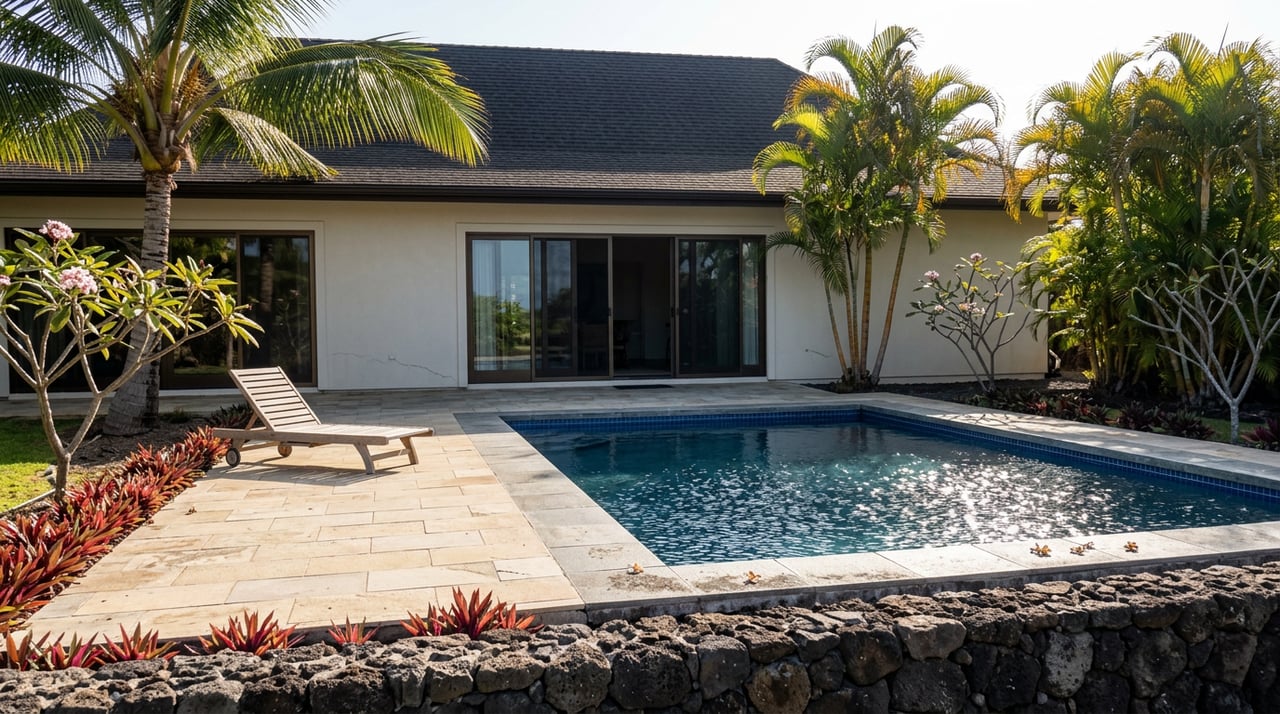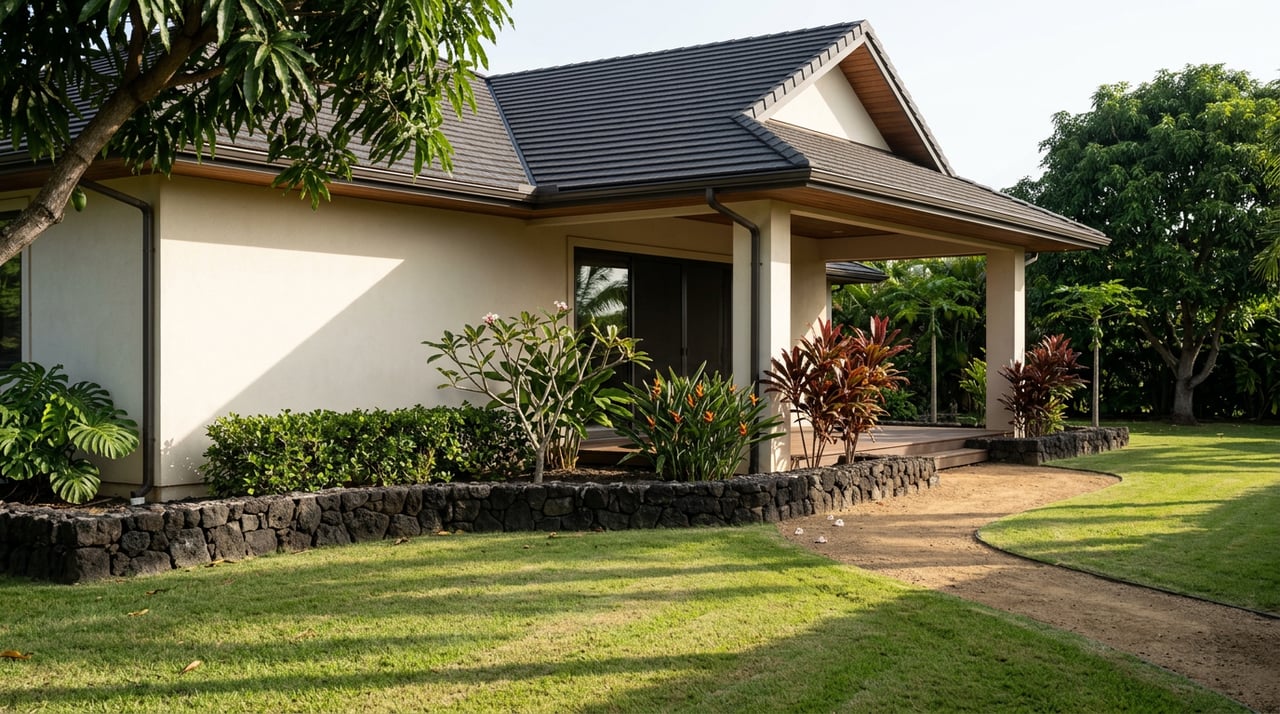
Two Haiku parcels come across your desk. Both are two-acre agricultural lots, both sit on the Upcountry side of the Hana Highway, both are listed within a few thousand dollars of each other. One has a working ¾" county water meter installed in 1998. The other has a priority number on the Upcountry list and a rainwater catchment tank the seller installed himself. On the MLS sheet, they look like comparables. In 2026, they are not.
This is the year the assumptions underneath a Haiku land price quietly get rewritten. A filter project at the county treatment plants is closing the gap between what Upcountry can supply and what Upcountry demands. A new rule for calculating domestic water demand took effect on January 1. Together, those two shifts change what an existing meter is worth, what a spot on the priority list is worth, and what "off-grid capable" is worth. The listing agent will rarely translate any of this into a price story. That translation is what this post is for.
The 2013 Freeze That Still Sets The Price
To understand why a meter matters so much, start with the moratorium. The Maui Department of Water Supply stopped accepting new applications for meters on the Upcountry system on January 1, 2013. Anyone who wanted service on a parcel in Kula, Pukalani, Makawao, Haliimaile, or the served portions of Haiku had to already be on the list, or wait for something to change.
For twelve years, very little did. In an October 2025 briefing at the Hannibal Tavares Community Center, DWS director John Stufflebean said 1,424 applicants remained on the Upcountry waitlist, and that peak Upcountry demand of 10.1 million gallons per day was running about 4% above the county's reliable supply of 9.7 million gallons. In his own words, "we already are in a situation where there's not enough water to meet the existing demand."
That deficit is why Haiku land pricing has behaved the way it has. A parcel with an installed meter has been, functionally, a parcel with a permit path. A parcel without one has been a parcel with a project.
What Changes When The Filters Come Online
The filter upgrade is the first shoe to drop in 2026. Per Stufflebean's October briefing, installing new filters at the Upcountry treatment plants will add roughly 1.5 million gallons per day of reliable capacity, raising the ceiling from 9.7 MGD to 11.2 MGD, and the roughly $5 million project was "well underway" at that time. That is enough to move the system from a chronic 4% shortfall to a modest surplus, and enough, in Stufflebean's phrasing, to "allow us to process the meter list" again.
For a buyer looking at Haiku land in July of 2026, the operative question shifts. It is no longer whether the county will ever call the next applicants on the list. It is when, and how many, and at what upstream cost. Applicants who receive an offer letter from the county have 30 days to respond and may reserve a meter for up to five years before establishing service. A parcel whose current owner is high on the list carries a real, near-term option value that a similarly priced off-list parcel does not.
Longer-term supply is not resolved by filters alone. Stufflebean's plan also included two reservoirs at the Kamole Treatment Plant, 72 million and 68 million gallons in capacity, in the design stage with $1.4 million allocated for design in the 2026 budget and roughly $25 million anticipated for construction. Six additional wells are under consideration at Piiholo, Hokunui, Kealanoa, Kalialinui, Kula Kai, and Kula Ridge. None of these show up on a comparable-sales report. All of them will move Haiku land values over the next several years.
The January 1 Line Nobody Puts On A Listing Sheet
The second 2026 change is subtler and, for buyers with an existing meter, arguably more consequential. Per the county's Engineering Division, the previous method for buying Additional Fixture Units applies only to building permit applications and requests for new or additional water service issued prior to January 1, 2026. Permits issued on or after that date are subject to a new method for calculating domestic water demand. The whole framework is governed by Maui County Code Chapter 14.13.
Why this matters at the closing table: an existing Haiku meter is not a blank check. It comes with a fixture-unit budget. A typical accessory cottage build might consume around 6.5 fixture units, roughly 1.7 for a tub or shower, 0.6 for a lavatory, 1.7 for a toilet, 0.6 for a kitchen sink, and 2.0 if you plan to plumb a washer. If the main house on the parcel is already close to its fixture-unit ceiling, adding an ohana or a pool bath used to mean applying to purchase more units under the old table. Permits pulled on or after January 1, 2026 are calculated under a different framework.
For a seller, the practical translation is that documentation of remaining fixture-unit capacity, or lack of it, is now part of the story a listing needs to tell. For a buyer, it is a due diligence question that belongs in writing before the inspection contingency ends.
Three Categories, Three Different Investments
The Haiku inventory a buyer will actually see in 2026 tends to fall into three groups. They photograph the same. They price the same. They are not the same.
- Metered and permit-ready. An installed active meter with headroom in its fixture-unit budget under the post-2026 calculation. The rarest of the three, and the closest thing to a turn-key acreage buy Upcountry.
- On the priority list. No meter yet, but a documented priority number, ideally near the top pages of the list. The 2026 filter capacity makes this category more valuable than it was in 2024, but the value depends heavily on where the number sits and whether the parcel is adjacent to an adequately sized distribution main. As one Olinda owner publicly reported after waiting since 2001, the required upstream main upgrade to accept a new meter can cost well over a million dollars when the existing line is undersized. "On the list" is not the same as "on a main that can serve you."
- Off-list, on catchment or well. Fully independent of the county system, usually with a rainwater catchment tank sized for two occupants or a private well drilled into the Haiku aquifer. These parcels are attractive to a specific buyer, one who is comfortable with cistern management, filtration, and, in the well case, ongoing pump and testing costs. They do not benefit from the 2026 filter project at all, and they should not be priced as if they do.
The mistake buyers make is treating category two as if it were category one. The mistake sellers make is pricing category three as if it were category two.
The Haiku Aquifer Question
There is a political variable underneath all of this that any serious Haiku buyer should read directly rather than take secondhand. The county's Water Use and Development Plan proposes drilling wells in the Haiku aquifer to supply water to Central and South Maui. In a Haiku Community Association town hall covered by Haikumaui.org, the Ko'olau/Ha'iku well strategy was flagged in multiple sections of the WUDP, and residents including Aha Moku Council representative Joyclynn Costa pushed back on the premise. Council member Mike Molina publicly favored sending the plan back to committee.
None of this decides tomorrow's title report. It does shape the ten-year picture, and it is one of the few Haiku market variables where the community's own written record is more useful than any brokerage summary.
A Short FAQ
Does an existing meter transfer with the property at closing? Yes. A meter is tied to the parcel, not to the person, and stays with the land through a sale. What does not transfer automatically is any remaining fixture-unit budget assumption; that is confirmed through the permitting office under whichever calculation method applies to your build date.
Can I buy someone else's spot on the Upcountry priority list? No. Priority is not transferable independently of the parcel. If a listed parcel already has a priority number attached, that number generally moves with the sale, but you cannot purchase another applicant's number for a different property.
Is a catchment-only parcel financeable? It depends on the lender and the loan program. Conventional lenders in Hawaii have financed catchment properties, particularly in Puna on the Big Island, but Maui lender comfort varies parcel by parcel. This is a question to raise with a local lender before you write an offer, not after.
The one-sentence version of all of this: in 2026, the Haiku land market stops being priced against a permanent shortage and starts being priced against a scheduled recovery, and the buyer who understands the difference between the three categories above will negotiate from a stronger position than the buyer who reads the median.
If you are weighing a specific Haiku parcel and want a read on which category it actually falls into, the team at Kate and Wendy Peterson with Island Sotheby's International Realty works these questions parcel by parcel. Schedule a Showing when you are ready to look at the lot in person, and bring the meter question with you.